
Excavation in North Cleveland, TN
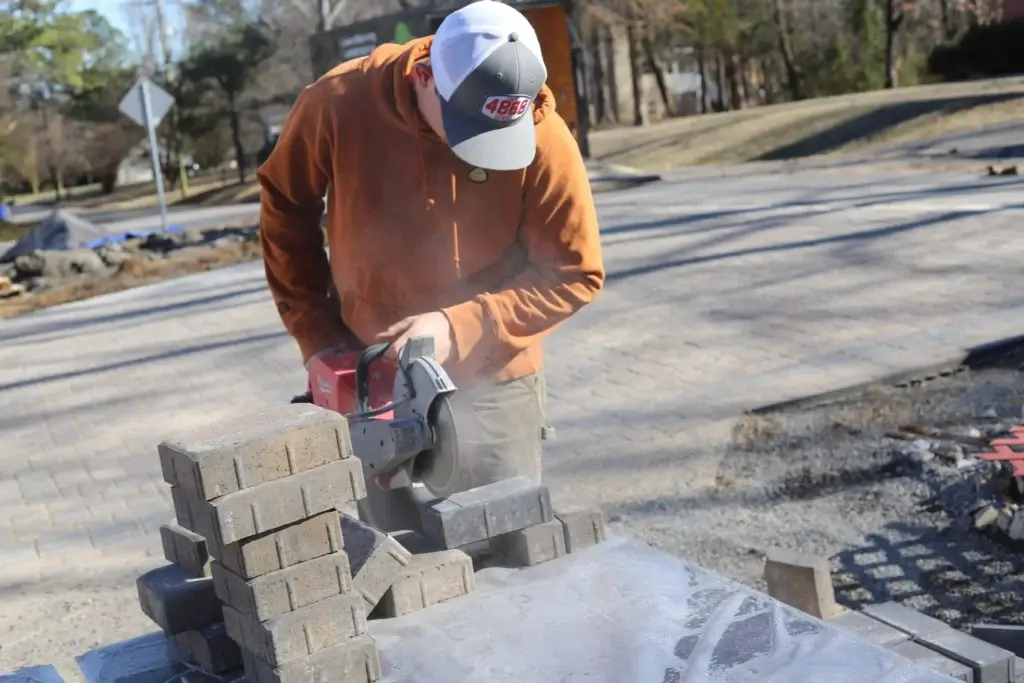
North Cleveland is where the city has been growing, the subdivisions off Paul Huff Parkway and Mouse Creek Road, the newer builds spreading toward Hopewell and the interstate. These are young neighborhoods where the houses are modern and the yards, too often, drain like an afterthought. Pullen’s Land Works finishes and fixes north-side properties: grading corrections, drainage, patios, walls, and turf. Free walk-throughs: (423) 716-4143.
New-construction yards have a signature problem set, and North Cleveland has the county’s densest collection of it. Builders grade a lot to pass final inspection, not to carry a clay yard through a Tennessee winter, and the results surface in year two or three: water standing between houses, back yards that pitch subtly toward the slab, the swale between lots that never quite flows. None of it is dramatic on its own, and all of it compounds if you leave it.
Builder-grade drainage, corrected
We restore positive drainage around foundations, cut the side-yard swales that should have existed, bury downspouts out to daylight, and install French drains and catch basins where the lot genuinely needs them, cheapest effective fix first. Most north-side yards need shape more than they need pipe, and a regrade often solves what looked like a big problem.
Backyards finished properly
Walls on the cut lots
Plenty of north-side lots are cut-and-fill, holding grade with a builder-minimum wall that’s already starting to lean. We build and replace walls with drainage behind the face, and on the steeper lots we design tiered walls that turn the back slope into terraces instead of a mowing hazard.
Local ground, local patterns
How hiring us works
Frequently Asked Questions
Our builder says the yard "will settle in." Will it?
My neighbor uphill put in a new driveway and now my yard floods. What can actually fix that?
Upstream impervious surface is one of the most common North Cleveland complaints we hear. A French drain or diversion swale intercepts the concentrated runoff before it reaches your yard. The key is routing the outlet somewhere it actually drains, which changes lot to lot on this ridge terrain. We walk both the source and the destination before recommending a system size
Can you work in newer subdivisions with HOA rules?
The timber wall in my backyard is bowing but hasn't fallen. How much time do I have?
Less than most people think. Once a timber wall bows past a certain point, the deadmen anchors are under tension rather than compression and they start pulling out of the soil. A wet spring accelerates it. We can give you an honest read during the site visit on whether you have a season or whether you’re already in the red.
Do ridge-approach walls cost more than flat-lot walls?
They can. A steeper slope means more hydrostatic pressure, more drainage aggregate, and sometimes geogrid reinforcement. We size it to the actual slope, and the on-site quote reflects what your ground actually needs.